How Location Intelligence Helps Local Businesses Grow & Sustain
Location Intelligence for Sustainable Local Businesses
GeoLens explores how location intelligence, GIS and spatial analysis empower small businesses, startups, and local governments to make smarter, more sustainable decisions.
What Is Location Intelligence?
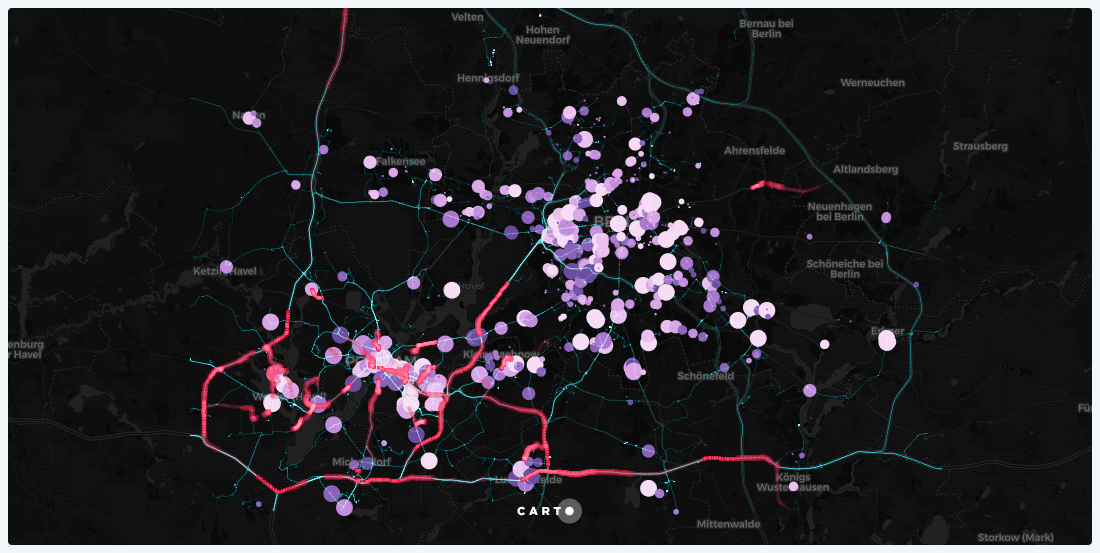
Location intelligence (LI) is the process of analyzing geographic and spatial data to reveal patterns, relationships, and trends that support decision making. Using GIS tools, organizations can integrate maps with business, environmental and demographic data to understand where decisions matter most.
Unlike traditional spreadsheets, GIS reveals spatial patterns such as customer clusters, risk zones, accessibility and market gaps, making location a measurable business variable rather than an assumption.
Why Location Intelligence Matters for Local Businesses
| Business Challenge | GIS-Based Solution | Impact |
|---|---|---|
| Choosing a business location | Analyzing population density, competitors and accessibility | Higher success rate |
| Understanding customers | Mapping customer origins and demand patterns | Targeted marketing |
| Logistics and delivery | Route optimization and service area analysis | Lower costs and emissions |
| Environmental exposure | Identifying climate and hazard prone zones | Reduced operational risk |
| Sustainable growth | Spatial alignment with local capacity | Long term resilience |
Core GIS Applications for Sustainable Businesses
1. Site Selection and Market Potential

GIS enables businesses to evaluate multiple locations simultaneously using real world indicators such as infrastructure availability, population characteristics, transport access, land use compatibility and proximity to competitors.
2. Customer Mapping and Demand Analysis
- Identify high value customer clusters
- Understand neighborhood level demand variation
- Design location specific marketing and service strategies
3. Logistics and Operational Efficiency

Spatial analysis improves delivery planning, reduces travel distance and fuel consumption and ensures efficient service coverage, directly linking operational efficiency with environmental sustainability.
4. Sustainability Through Location Intelligence

For local businesses, sustainability is fundamentally a spatial decision. Where a business operates determines its exposure to climate risk, energy demand, transportation dependency and impact on surrounding communities.
Location intelligence integrates environmental datasets such as flood risk, heat stress, air quality and land-use sensitivity into everyday business decisions. This allows businesses to grow responsibly while minimizing environmental impact and long-term vulnerability.
- Selecting sites with lower climate and disaster risk
- Reducing emissions through optimized logistics
- Aligning business activity with local environmental capacity
- Supporting compliance with sustainability and ESG goals
Insight: Sustainability is not only about what a business does, but where it operates and how spatial choices shape long-term resilience.
How Local Governments Use Location Intelligence
Local governments apply GIS for urban planning, infrastructure development, disaster management and environmental monitoring. Public spatial datasets enable businesses to align private investments with zoning regulations, transport planning and sustainability objectives.
Popular GIS Tools for Local Businesses
| Tool | Main Use | Skill Level |
|---|---|---|
| ArcGIS | Advanced spatial analytics and dashboards | Advanced |
| QGIS | Open-source mapping and analysis | Intermediate |
| Business Analyst Tools | Demographic and site selection analysis | Beginner–Intermediate |
| Cloud GIS APIs | Web-based spatial analytics | Flexible |
The GeoLens Perspective
GeoLens demonstrates that sustainability for local businesses begins with informed spatial decision-making. Location intelligence enables businesses to balance profitability with environmental responsibility and community well-being.
Rather than treating sustainability as a separate policy objective, GIS embeds it directly into site selection, logistics, risk management and daily operations, making sustainability practical, measurable and location-driven.
Smart businesses think spatially and sustainable businesses think spatially first.


Comments
Post a Comment