How GIS and Digital Marketing Enable Hyperlocal Customer Targeting
Using location based insights to improve marketing precision, customer engagement and business performance
In the contemporary digital economy, businesses operate in highly competitive and information rich environments. Traditional mass marketing approaches are increasingly ineffective because they fail to address spatial variations in consumer behavior. As a result, organizations are turning to Geographic Information Systems (GIS) and digital marketing techniques to design hyperlocal strategies that deliver targeted, relevant and timely messages to customers based on precise geographic context.

Understanding Hyperlocal Marketing
Hyperlocal marketing refers to marketing strategies that focus on reaching customers within narrowly defined geographic boundaries such as neighborhoods, streets, or delivery zones. Unlike broad advertising campaigns that target large populations, hyperlocal marketing emphasizes relevance and proximity.
This approach is particularly effective for small and medium enterprises, local retailers, restaurants, service providers and location-dependent businesses.
Role of GIS in Digital Marketing
GIS plays a foundational role in digital marketing by enabling the collection, visualization and interpretation of spatial data. It allows marketers to identify customer clusters, analyze movement patterns and understand geographic variations in demand.
By integrating GIS insights into digital marketing workflows, businesses can segment audiences more accurately, optimize advertising reach and allocate marketing budgets efficiently.

Common Hyperlocal Marketing Strategies Enabled by GIS
| Strategy | Description | Business Advantage |
|---|---|---|
| Geotargeted Advertising | Displaying advertisements to users within a specific geographic radius | Higher engagement and improved return on investment |
| Local SEO | Optimizing digital content for location based searches | Increased online visibility and physical footfall |
| Geo-fencing | Triggering notifications when users enter predefined zones | Real-time customer interaction |
| Spatial Customer Mapping | Analyzing customer density and movement patterns | Enhanced personalization and targeting accuracy |
Business Applications of GIS Based Hyperlocal Marketing
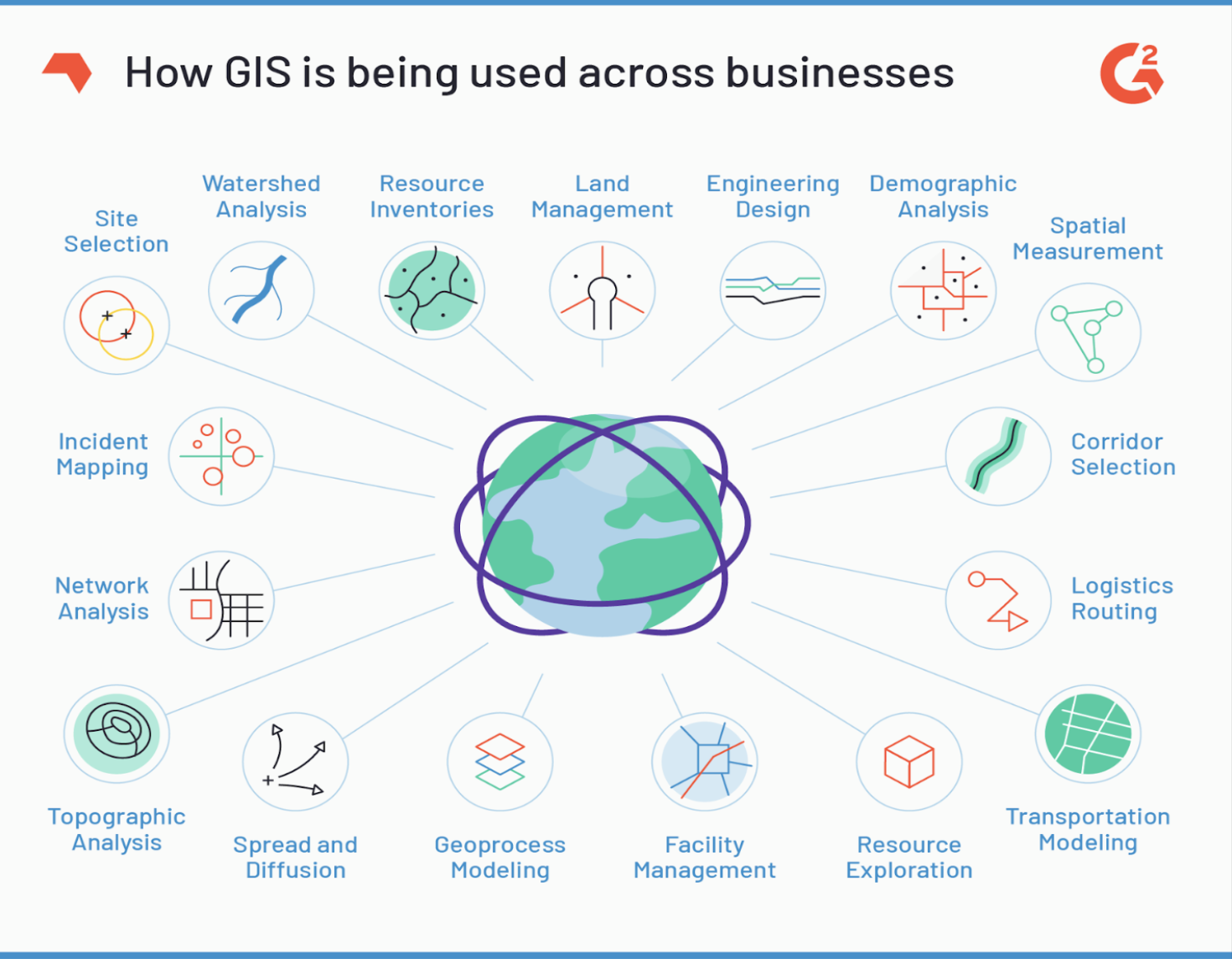
Retail businesses use spatial analysis to identify high-footfall zones, food delivery platforms optimize service areas and service-based businesses rely on location data to reach customers during peak demand periods.
Benefits of Hyperlocal Marketing for Businesses
- Reduced marketing costs due to precise geographic targeting
- Improved relevance of advertisements and promotions
- Enhanced customer satisfaction through personalization
- Better understanding of local market dynamics
- Data-driven decision making that reduces business risk
From a digital marketing perspective, GIS supported hyperlocal strategies enable businesses to maximize marketing effectiveness while minimizing unnecessary expenditure.
Challenges and Ethical Considerations
While hyperlocal marketing offers significant benefits, businesses must ensure ethical use of location data. Protecting user privacy, maintaining data accuracy and complying with data protection regulations are essential for sustainable implementation.
Conclusion
The integration of GIS and digital marketing represents a strategic shift from generic advertising toward intelligent, location-aware engagement. Businesses that adopt hyperlocal marketing strategies can strengthen customer relationships, improve operational efficiency and gain a competitive advantage.
Follow GeoLense for more insights on geospatial analytics, GIS applications and digital marketing strategies.


Comments
Post a Comment